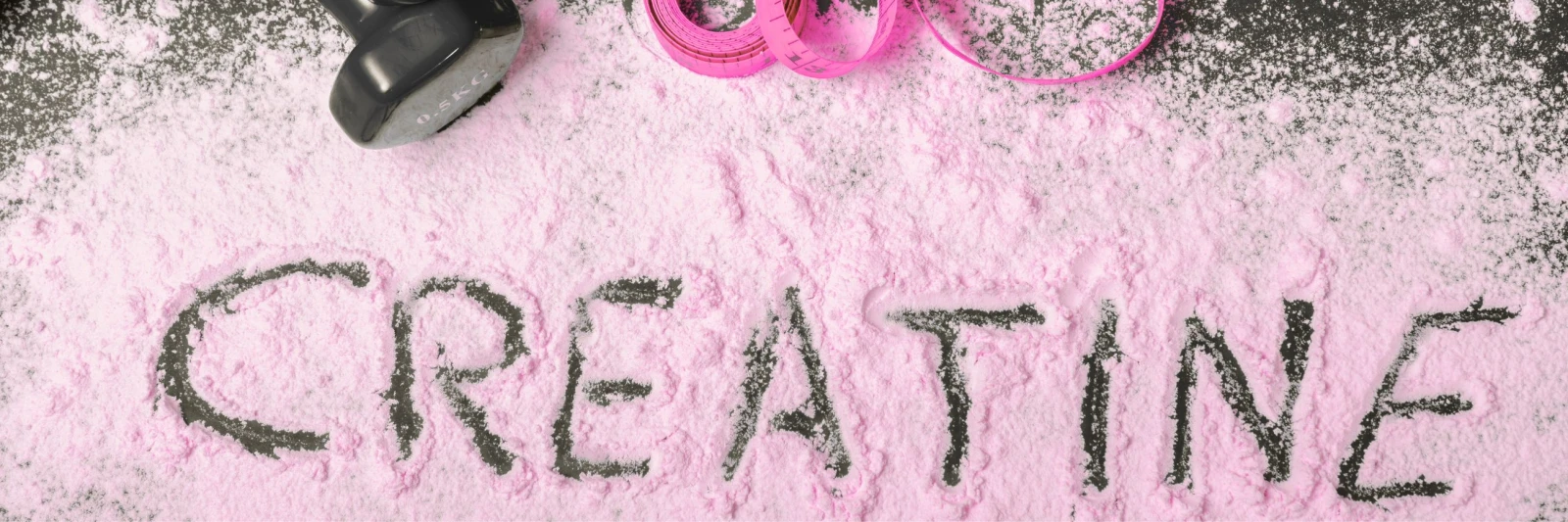
There’s a moment many people know: you’re standing in front of the supplement shelf, phone in hand with a half-read forum thread, facing twelve tubs of creatine. Monohydrate, HCl, “micronised”, “buffered”, one with grape flavour. Five people on the internet have five opinions on the loading phase; one swears it’s bad for your kidneys, another says it makes you smarter. You put the tub back and leave. Nothing decided, again.
That’s the real tragedy of this topic. Because creatine of all things, the most thoroughly researched supplement we have, with hundreds of studies over decades, causes more confusion than almost any other powder on the shelf. Not because the science is unclear. But because between the science and the shelf there’s a thick layer of marketing, half-remembered rumours and well-meant advice.
Let’s clear that layer away. Calmly, honestly, and with a clear line between what’s real and what is so far only a promising hunch.
What creatine actually does (and doesn’t do)
Let’s start with the biggest misunderstanding: creatine isn’t an energy source. It isn’t an espresso for muscle tissue, a growth accelerator or gentle doping.
Creatine is a substance your body makes itself. Your body produces some every day, and you take it in through meat and fish. About 95 percent of it sits in your muscles. There it works like a backup battery: during a short, intense effort, a heavy set or a sprint, your muscle uses up its immediate energy carrier in a flash. Creatine helps it recharge that energy carrier faster. It doesn’t create energy out of nothing. It makes sure the next burst is ready sooner.
This one insight explains almost everything else. It explains why creatine works for strength and short peaks and not for a 10K run. And it explains the most important sentence of all: creatine only works together with training. It’s the amplifier, not the engine. Like interest on your training: it only pays out if you pay something in.
The part that’s real: strength, muscle, safety
For strength and muscle, the evidence is first-class. A summary of 22 studies with more than 700 people averaging around sixty years of age shows: those who took creatine in addition to strength training gained on average about one and a half kilograms more fat-free mass than the group doing the same training without creatine, plus more strength. The effect is real and solid, but moderate, and it shows up over weeks, not overnight.
Safety is just as clear. The international position stand of the sports nutrition society (ISSN) sums it up: creatine is safe and well tolerated in healthy people, over years and at doses well above what people usually take. Which brings us to the most stubborn rumour.
The kidney myth: a mixed-up blood value
Hardly any worry keeps more people away from creatine than the one about their kidneys. Where does it come from? A misunderstanding. When you take creatine, a blood value called creatinine rises slightly, and that’s the same value doctors use to check kidney function. Here, though, the rise is just a breakdown product of the creatine itself, not a sign of damaged kidneys. A 2025 systematic review finds no negative effect on kidney function in healthy people.
The picture that sticks: a smoke alarm that goes off because you’re making toast. The noise is real. There’s still no fire. One practical tip stays sensible: when you see a doctor, mention that you take creatine so a slightly raised value is interpreted correctly. And the fair limit: if you have known kidney disease or are pregnant, check with your doctor first.
The part that’s promising, but preliminary
Now it gets exciting, and this is where serious assessment parts ways with marketing. Because it’s not only muscle that uses this energy system; the brain does too.
An analysis of ten controlled studies did find an improvement in memory performance with creatine, but the effect was small, and older people benefited more clearly than younger ones. Something is most likely to show when the brain is under pressure, for example with lack of sleep. That’s a possible added benefit, not a focus button.
You have to be even more careful with mood. There are studies in which creatine was given in addition to normal treatment for depression, with signs that more people responded. An exciting signal, but small numbers of participants and nothing certain. And to be very clear: creatine isn’t an antidepressant and doesn’t replace therapy. If you’re struggling mentally, the first step isn’t a powder, it’s a person.
Why women should pay particular attention
“Creatine is for men” may be the most expensive mistake of all, because it keeps away the very group that would benefit a lot. Women naturally have smaller creatine stores and may even respond more strongly to supplementation. The strength benefit applies to both sexes.
And then there’s a finding that’s particularly interesting around menopause: in a study lasting a whole year, postmenopausal women took creatine and trained with weights. The loss of bone density at the femoral neck was much smaller than in the comparison group, roughly one percent instead of almost four. The condition, as so often: in combination with strength training. And the honest context: so far this is mainly one very well-run study, not a whole library. The direction is right; broad confirmation is still under way.
In practice: simpler than the shelf makes you think
After all the studies, the good news: using it is pleasantly simple.
Take three to five grams of creatine monohydrate a day. Every day. A loading phase is possible but not necessary; without it, your stores are just as full after three to four weeks, only a bit later. The time of day hardly matters; what matters is consistency, including on rest days. That the powder never fully dissolves is normal and not a quality problem.
And when buying, you’re allowed to save money. Monohydrate is the best-researched and most effective form, and it happens to be the cheapest. The expensive special forms with fancy names are like a designer water bottle: nicer label, higher price, same contents. One quality feature is worth it if you like: the Creapure purity seal. The often-heard hair loss myth, by the way, goes back to a single small study that was never confirmed; a real effect on hair simply isn’t proven.
Bottom line: the rare powder where “best proven” and “cheapest” coincide
Creatine isn’t doping, a chemical sledgehammer or a cure-all. It’s a substance your body makes itself, which we top up a little. For strength and muscle, together with training, the benefit is excellently proven. For brain, mood and bones there are promising early signals that have to be honestly labelled “not yet conclusive”. It’s safe, it’s cheap, and the kidney fear rests on a mixed-up blood value.
What’s really remarkable is exactly this: creatine is the rare case where “best proven” and “cheapest” describe the same product. Not good news for the marketing of expensive tubs. But very good news for you, and for the tub that might no longer sit unopened in the cupboard.
Medical note: this article is for information only and doesn’t replace medical advice. If you have kidney disease, are pregnant or are struggling mentally, please seek medical or therapeutic advice. alethics does not make diagnoses.