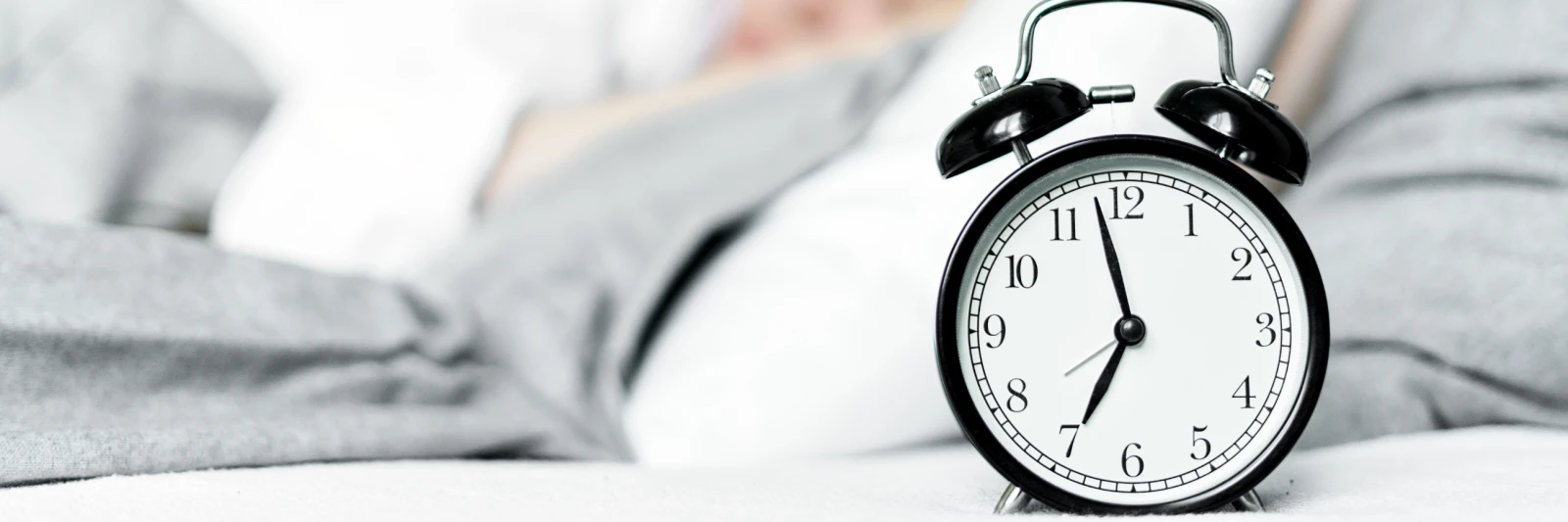
There’s a moment almost everyone knows. It’s 11:40 pm, the episode is over, and you know full well you should go to bed now. Instead, the next one starts. “I’ll sleep when I’m dead,” you think, and you almost feel a bit productive. We’re the only species that’s proud of how bad it is at something essential for survival.
At the same time, the counter-movement is booming: three-hundred-euro rings, sleep scores, longevity podcasts telling you that “ninety percent of your health is decided at night”. Between “sleep is wasted time” and “sleep is the sacred centre of longevity” lies a big, calm truth. That’s what we’ll look at today: evidence-based, without hype, so that by the end you know where to start.
Why sleep isn’t a break
The most important change of perspective first: sleep isn’t an off state, it’s a night shift. While you drift off, repair processes start in muscles and tissues, the immune system regulates itself, hormones get sorted, and your brain consolidates what you learned during the day.
In this context you often hear about the “glymphatic system”, which supposedly flushes metabolic waste out of the brain at night. It’s a fascinating idea, but honesty is part of it: this finding comes mainly from studies in mice (Xie et al., Science 2013). Whether the system works the same way in humans hasn’t been established yet. At alethics, we don’t sell research frontiers as textbook knowledge. What we can say for sure is enough anyway: in large observational studies, chronically poor sleep is associated with more cardiovascular disease, diabetes and depression. Association, not proof, but a pattern worth taking seriously.
The eight-hour fallacy
“Eight hours” is perhaps the best-known health number in the world. And it’s a simplification. The joint recommendation of the American sleep medicine societies (AASM and Sleep Research Society) gives seven hours or more for healthy adults, as a lower limit, not a magic target.
It gets interesting when you ask what “too little” and “too much” mean. Large meta-analyses show a U-shaped relationship between sleep duration and risk of death: lowest at around seven hours, rising on both sides (Shen 2016; Yin 2017). The honest addition many leave out: the “too much sleep” side needs to be read with caution. Very long sleep is often the result of an illness, not its cause. Observational data can’t cleanly separate the two.
In practice, that means: most adults fall between seven and nine hours, and your personal need lies somewhere in that range. The best self-test is free: if you regularly sleep much longer on days off without an alarm than during the week, you have a deficit on workdays. And the line “I get by on five hours”? True short sleepers exist, but they’re about as common as a lottery jackpot.
Regularity beats the perfect night
If you remember just one thing from this article, make it this: it’s less about the perfect single night and more about the pattern. An analysis of almost 90,000 people from the UK Biobank found that the regularity of the sleep-wake rhythm predicted mortality better than sleep duration alone. The most regular sleepers had 20 to 48 percent lower all-cause mortality than the most irregular (Windred, SLEEP 2024). These are observational data too, but the practical consequence is low-risk and a relief at the same time: you don’t have to optimise every night. You have to keep a rhythm.
The strongest lever for that is a fixed wake-up time, including at weekends. It steers your internal clock more strongly than your bedtime. Sleeping in until noon on Sunday feels good, but it shifts the clock and makes Monday a slog. Experts call this “social jet lag”.
The four levers that really work
The internet is full of 30-point sleep hygiene lists. The problem: as the only measure for a real sleep disorder, sleep hygiene is actually poorly supported (more on that in a moment). But for people with occasionally restless sleep, four levers do most of the work:
1. Morning light. Get out into daylight in the first hour after waking. It sets your internal clock and makes you tired on time in the evening.
2. A fixed wake-up time. The anchor for the whole rhythm, see above.
3. Caffeine earlier. Caffeine has a half-life of five to six hours. In one study, even 400 mg taken six hours before sleep measurably shortened sleep time (Drake 2013). The espresso at four lasts longer than you think.
4. Cool and dark. A bedroom of around 16 to 19 degrees Celsius supports the night-time drop in core body temperature that makes deep sleep possible.
And the glass of wine after work? It’s not a nightcap. Alcohol helps you fall asleep faster and then sleep worse: it suppresses REM sleep and fragments the second half of the night, from about two glasses.
Not a ban, just timing and honesty.
Two special cases: menopause and the sleep score
When women around 50 suddenly lie awake at night, it isn’t a failure, it’s hormone physiology. Falling progesterone (which has a calming effect) and oestrogen (which supports deep sleep and temperature regulation) destabilise sleep, and on top come hot flushes, which affect up to 80 percent of women. Insomnia affects about 35 to 60 percent during menopause, so you’re clearly in the majority. A lot can be managed yourself (sleep cool, less alcohol, fixed times); the question of hormone therapy belongs with your doctor.
And the expensive ring on your finger? Sleep trackers are decent at recording how long you slept but weak on sleep stages: only 75 to 91 percent accurate compared with lab measurement, and sometimes half that in poor sleepers. The “sleep score” is an unvalidated manufacturer formula. There’s even a name for fixating on it: orthosomnia, sleeping worse because you measure. Use the weekly trends, not the daily number, and if the score ruins your morning, put it away.
When nothing helps: the right next step
If problems falling or staying asleep persist for months, the guideline first-line treatment isn’t a sleeping pill but CBT-I, cognitive behavioural therapy for insomnia (AASM, Edinger 2021; European guideline, Riemann 2023). You can apply some of its building blocks yourself: don’t lie awake in bed for hours, get up after about 20 minutes and only go back when you’re tired; tighten your time in bed rather than extending it; “park” worries on a piece of paper before sleep. Sleeping pills work in the short term but carry risks (dependence, falls); they should be supervised by a doctor and never started or stopped on your own.
Bottom line: make sleep good, don’t just measure it
Sleep is the cheapest and one of the strongest levers for a long, capable life. But not as an optimisation project with a score; as a calm foundation. The goal is sufficient, regular, undisturbed recovery: seven to nine hours, a stable rhythm, light in the morning, no espresso and no nightcap in the evening. In the end, the yardstick stays honestly simple: how do you feel during the day? No ring answers that question better than you do.
This article is for information only and doesn’t replace medical advice. If you have persistent insomnia, loud snoring with pauses in breathing or pronounced daytime sleepiness, please see a doctor.