There are moments when the same thing is celebrated and mocked within minutes. Ozempic is one of those things. On one talk show, someone who has lost twenty kilos sits there beaming. In the next segment, people sneer at “weight loss for the lazy”, at celebrities injecting themselves slim while the rest of the world struggles. Admiration and scorn rarely sit this close together.
The problem with both reactions: they answer the wrong question. They argue about whether you should lose weight with a drug like this. But the question that really matters is a different one. It is: what do you lose in the process, and what remains when the pen eventually ends up in the bin?
Let’s take it apart calmly. No cheering, no mockery, just what the studies actually show.
A volume dial, not a fat burner
First, the most stubborn misunderstanding. Many people imagine Ozempic as a kind of fat melter: a drug that specifically dissolves fat deposits. It isn’t.
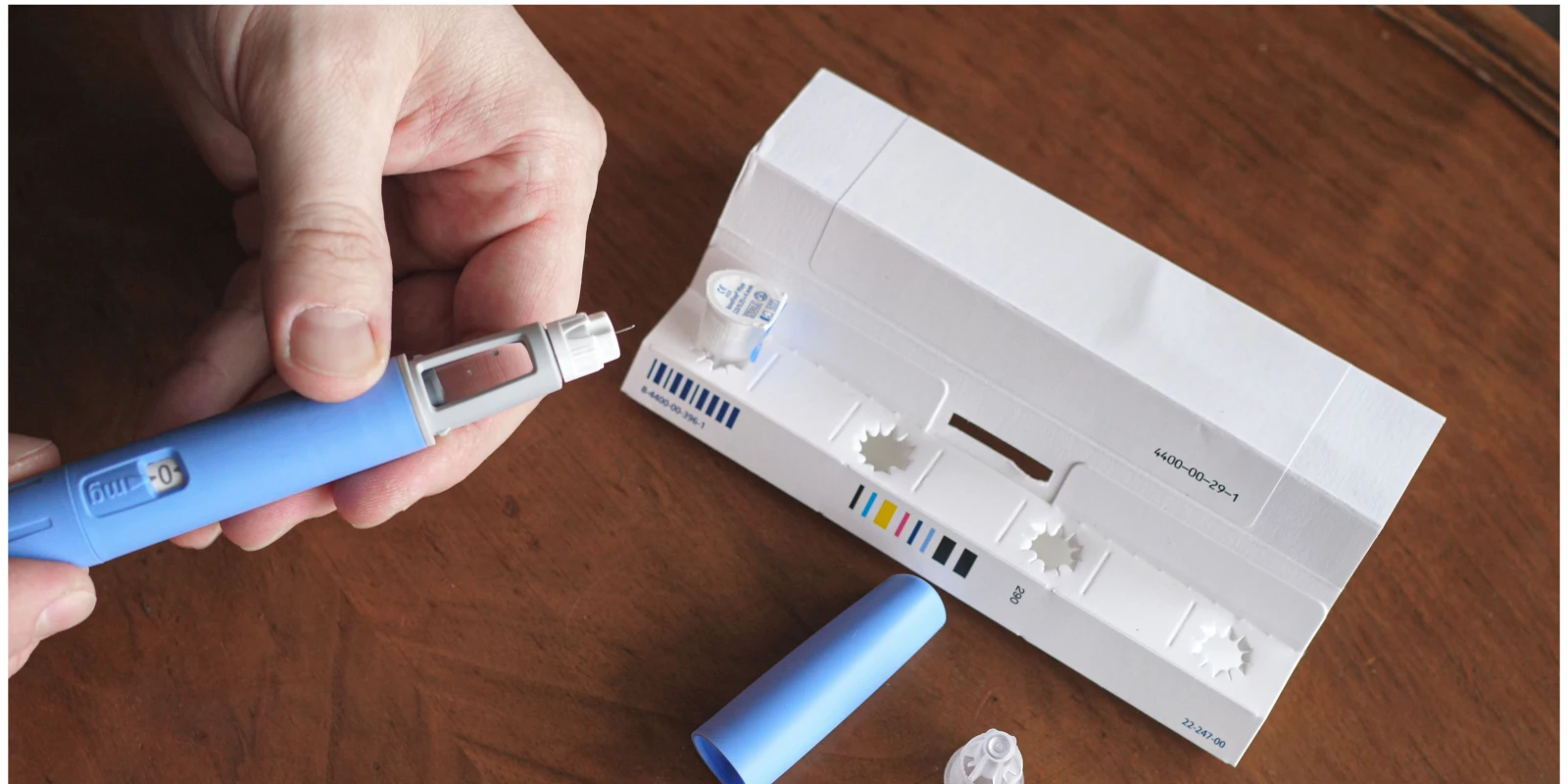
The active ingredient is called semaglutide and belongs to the so-called GLP-1 receptor agonists. That sounds like advanced chemistry class, but it means something simple: the drug mimics a hormone your gut releases after every meal anyway, a satiety signal. Hunger gets quieter, your stomach empties more slowly, you stay full longer. Over weeks you eat much less, often without the constant inner negotiation marathon with the fridge. And because fewer calories come in, you lose weight.
So semaglutide isn’t a fat burner but more of a volume dial for appetite. That difference sounds like hair-splitting, but it’s the key to everything that follows. Because a body that gets less energy takes the rest from somewhere. And it isn’t particularly picky about where.
What the scales don’t tell you
Here are the numbers that never appear in a before-and-after photo. In the large STEP 1 trial, nearly two thousand people without diabetes over a good year, participants on the higher dose lost on average about fifteen to seventeen percent of their body weight. The placebo group managed about two percent. Meta-analyses in recent years land at roughly eleven to fifteen percent on average. The effect is real and well documented; that has to be said clearly.
But the scales only measure a weight. They don’t say a word about what that weight consisted of. And that’s where it gets interesting: in studies on body composition, roughly twenty to forty percent of the weight lost was fat-free mass, meaning muscle and water, not fat. The range is so wide because the studies measure differently and the data are, honestly, still inconsistent. But the direction is clear: a relevant part of what comes off isn’t what most people want to get rid of.
Think of it like moving house. When you clear things out, it’s tempting to throw away everything that takes up space. You just need to be careful not to accidentally get rid of the tools you’ll urgently need in your new home. Muscle is that tool. It’s metabolism, a blood sugar buffer, strength and a good deal of independence in old age. Being lighter isn’t the same as being healthier.
The part hardly anyone talks about
Stopping the drug is talked about even less than muscle. Yet it’s an inseparable part of the honest calculation. In the extension of the STEP 1 trial, about two thirds of the weight lost came back after treatment ended. And along with the weight, the metabolic values largely moved back towards where they started.
That’s not personal failure. It’s simply pharmacology. A satiety signal you inject disappears when you stop injecting it. Appetite comes back, and with it the old amount of calories. If you know that, you see your time on the drug differently: not as the goal, but as a window. An open window with an expiry date, in which you can build exactly the habits that need to carry you afterwards.
Where the evidence is really strong
So that no skewed picture emerges: there’s one area where the data are impressive, and it often gets lost in the weight-loss noise. The SELECT trial, with more than seventeen thousand participants, wasn’t about weight loss at all but about the heart. In people with overweight and existing cardiovascular disease, semaglutide reduced the risk of serious events like heart attack and stroke by about twenty percent. In absolute terms, that’s about one and a half percentage points.
Both numbers belong together. Twenty percent sounds huge; the one and a half points bring it down to earth. That’s how honest communication works: relative and absolute effects side by side, no half-truths. And one detail is crucial: this benefit is proven for people with existing disease. Simply transferring it to healthy, low-risk people wouldn’t be serious.
Something that often gets mixed up, by the way, is the names. Ozempic and Wegovy contain the same active ingredient, semaglutide. The difference lies in approval and dose: Ozempic is approved for type 2 diabetes, Wegovy for treating obesity, usually at a higher dose. “Ozempic for weight loss” is therefore often a sloppy shorthand. And to say this too: the side effects are mainly gastrointestinal, nausea, vomiting, diarrhoea, constipation, dose-dependent and the reason the dose is increased slowly. In STEP 1, about seven percent stopped treatment because of them, compared with just over three percent in the placebo group. Manageable for most, but no sweet.
What you can do in practice
The good news is in the word “modifiable”. Muscle loss in a deficit isn’t a law of nature. Two levers are very well documented, completely independent of any drug.
The first is strength training. A muscle that’s used regularly gives your body a good reason to keep it. Full-body training twice a week, a few solid exercises, is completely enough to start. All that matters is the timing: from the beginning, not “once I’m a bit lighter”.
The second lever is protein, the building material of muscle. The range professional societies work with is roughly 1.2 to 2.0 grams per kilogram of body weight per day, spread over several meals. And here a quiet trap lurks with GLP-1: when your appetite is dampened, you automatically eat less, including less protein, without noticing. So you have to steer against it deliberately and put a good protein source on every plate: eggs, skyr, fish, pulses, tofu.
One point needs honesty: the research specifically on the combination “GLP-1 plus structured strength training” is still thin. That strength and protein protect muscle in a deficit is well documented. The exact interaction with the drug isn’t yet. That’s part of the truth.
A tool, not a shortcut
In the end, it all comes down to one sentence: a drug doesn’t replace a system. Ozempic can turn your hunger down and give you breathing space. But it doesn’t build your muscles, it doesn’t cook your food, and it doesn’t set up a habit that will still carry you in two years. The drug can open a door. You have to walk through it yourself.
If you understand that, you use semaglutide as what it can be: an effective tool for the right people, under medical supervision, with clear strengths and honest limits. Not as a shortcut that ends up back at the starting point. The question is never just whether the number on the scales goes down. The question is whether you end up stronger and healthier, and stay that way.
This article is for information only and doesn’t replace medical advice. Whether a GLP-1 medication is an option for you is a medical decision. alethics does not make diagnoses.